








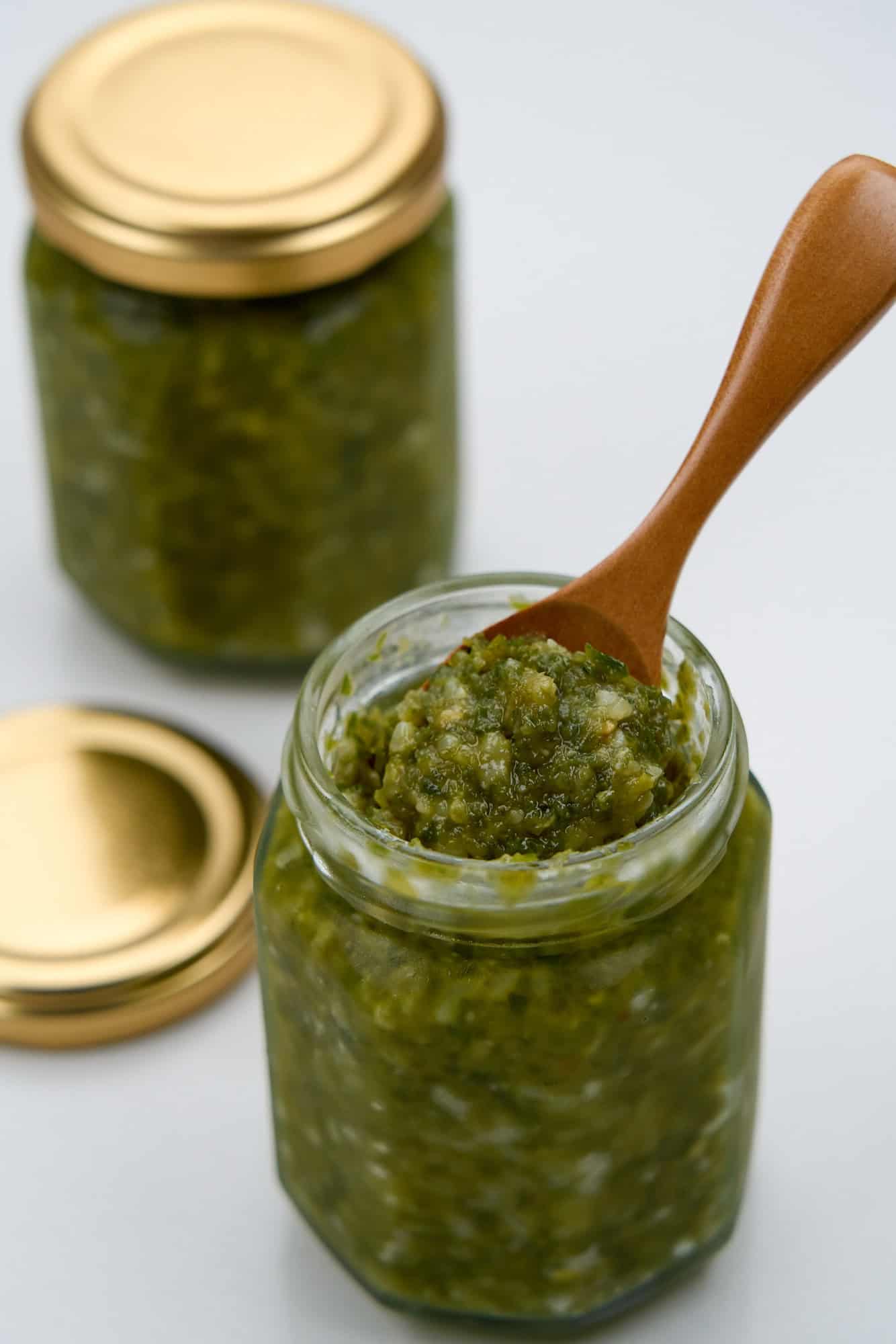
If you've been following along, you know I'm a little obsessed with condiments. Most of my favorites break down into a couple of functional categories: the ones that bring heat, like chili pastes and hot sauces, and the ones that bring savory umami, like miso, soy sauce, and fish sauce. This green chili paste sits in both camps, and what gets it there is a traditional Japanese hack called koji.
In most chili pepper recipes you start by scraping all the seeds out, but here they undergo a magical transformation. Seeds contain a ton of protein, and the enzymes in rice koji break the proteins down into the savory amino acids and peptides that our taste buds sense as umami. It's the same process that turns bland soybeans into soy sauce and miso, except chili peppers also bring capsaicin, so what comes out of the jar seasons like miso, but bites like a chili paste.
Northern Japan has had a version of this for ages. Sanshōzuke (三升漬け) is a Hokkaido and Tōhoku regional condiment made with green chilies, rice koji, and soy sauce in equal parts, and it mellows and deepens over a year in the jar. In my version, I swap the soy sauce for salt, which keeps the paste focused on the chili peppers.
I used ao togarashi (青唐辛子), which just means fresh green chilies, but usually refers to takanotsume (hawk's claw peppers). Picked green, they land somewhere around 30,000 to 50,000 Scoville units, between a serrano and a Thai bird chili, with a bright, grassy flavor and a sharp heat. Any hot green chili will work; just keep in mind that thicker-fleshed ones like serranos and jalapeños hold more water, so you'll end up with a looser paste.
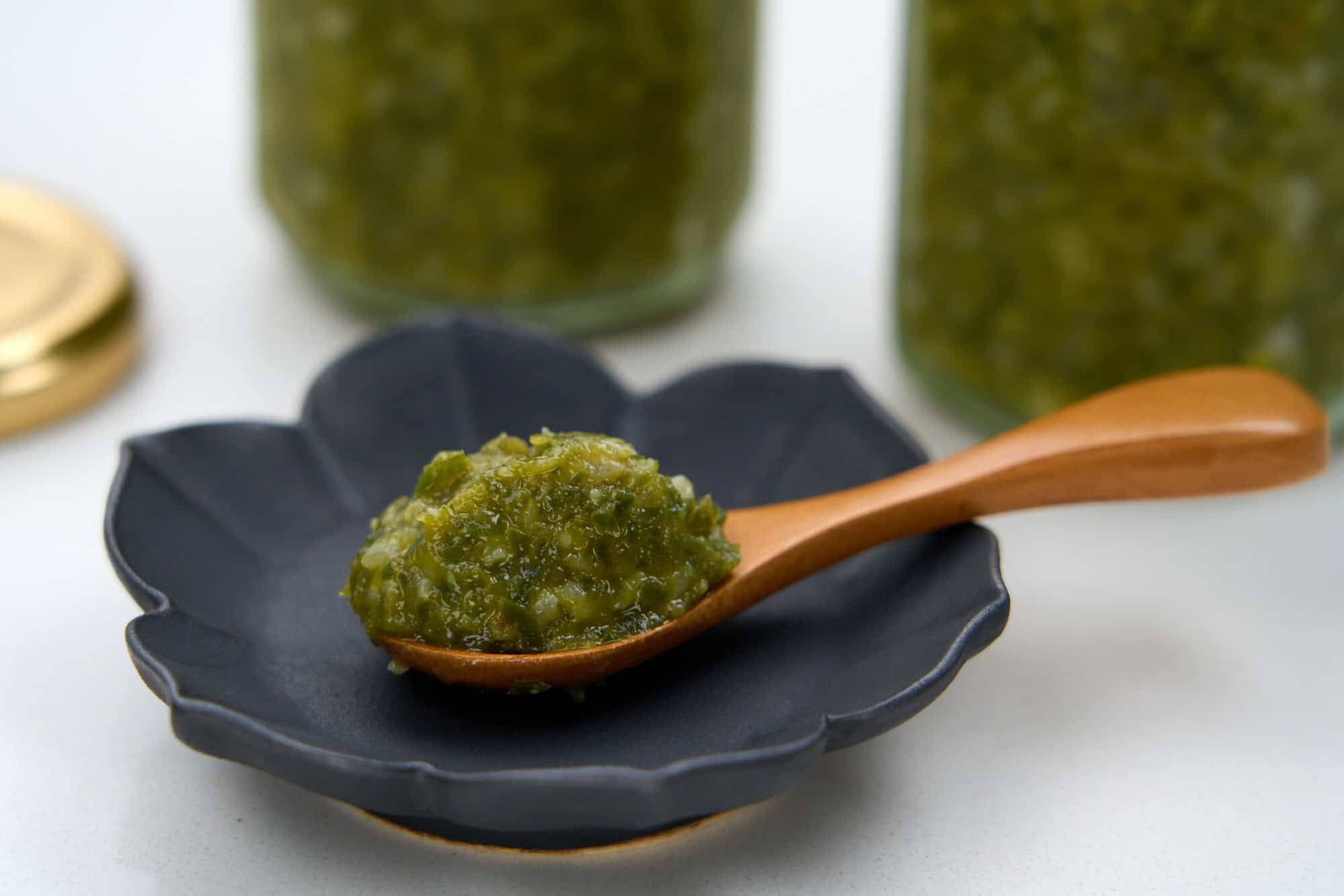
Whichever chili you use, the process is as simple as throwing three ingredients into a food processor, and waiting. One thing you want to be extra careful with is sterilizing the jars, and ensuring there are no errant bits of chili left clinging to the rim or walls of the jar. These can cause mold to start growing, so be sure to tap out the air, smooth the surface, and wipe the glass with a high-proof spirit until it's clean. After that the paste does the rest on its own. Two or three days on the counter and the color dulls from bright green to something earthier, and from there it goes into the fridge to age. I like to give it at least a month, and the longer it ages, the more depth it picks up.
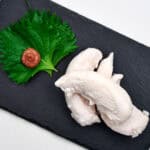
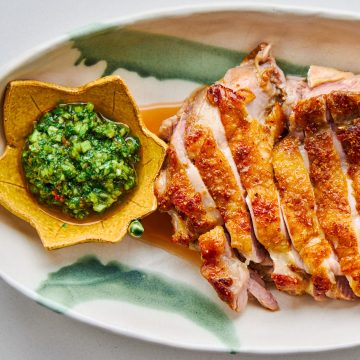
When this koji chili paste is ready, you can use it anywhere you want to add heat, and it brings a savory dose of umami along with it. Try a dab on sliced chicken breast chashu, a smidge in sesame marinated hamachi, or work some into the sauce for a bowl of tantan somen.
Access this Recipe
Welcome! I’m Marc Matsumoto, creator of No Recipes and author of the award winning cookbook Ultimate Bento. You’ve stumbled upon my secret stash with 378 original recipes with a new one coming every week! Unlike my other site, these recipes are member-supported, so you won’t find any banner ads here. Please consider becoming a member to access to this recipe, or you can check out some free recipes here.
- ✓ No ads
- ✓ Access the full stash of 378 recipes
- ✓ 1 new recipe per week
- ✓ Support Norecipes.com
Already a member?

Comments
No Comments