










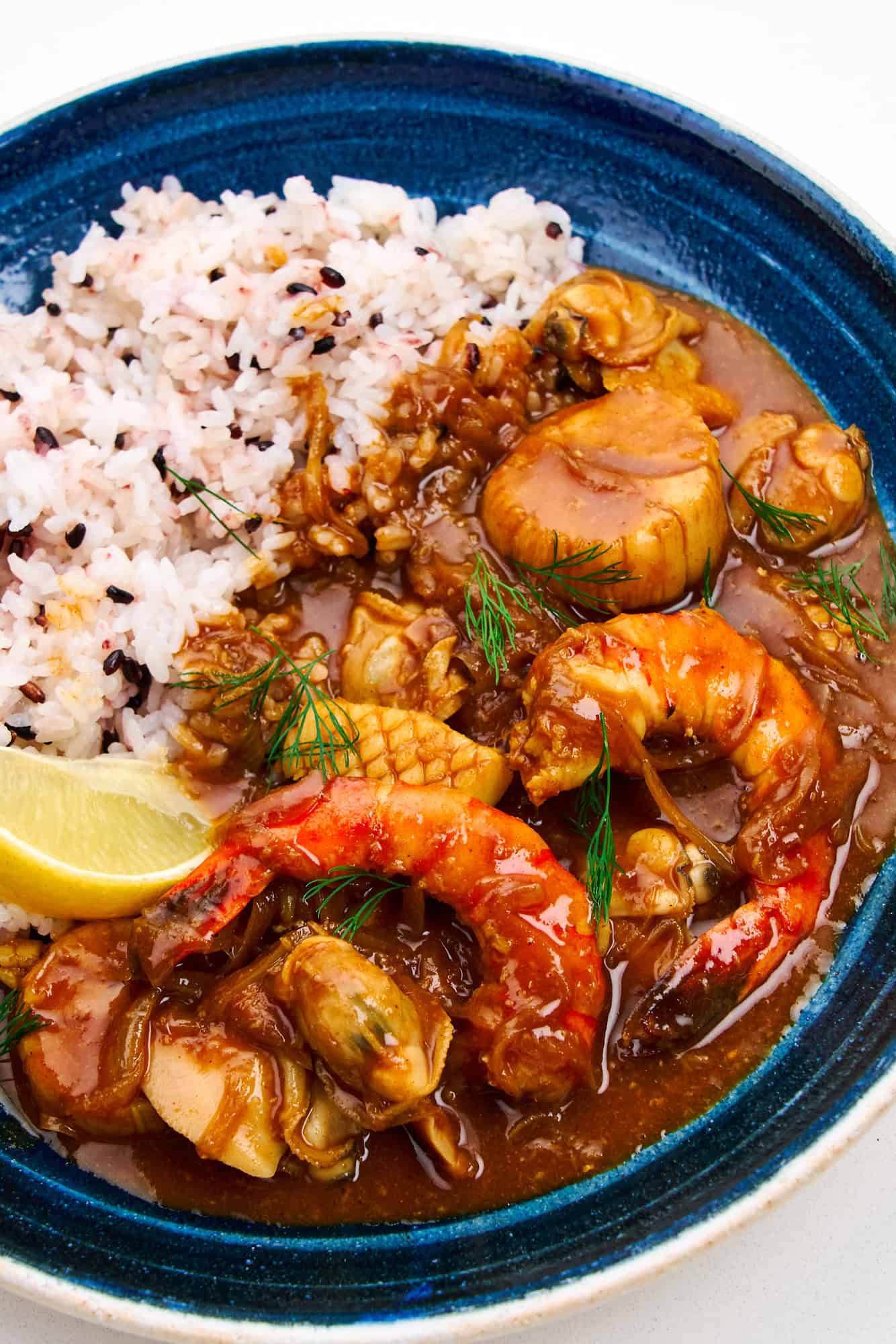
Most Japanese curries reward patience. You spend a good half hour coaxing sweetness out of onions, then brown the meat and let it all simmer with root vegetables until everything gets acquainted. If that sounds a bit like beef stew, it is. Curry made its way to Japan in the 19th century by way of the British Navy, and the template stuck. But Japan is an island nation with one of the richest seafood traditions in the world, so it didn't take long for cooks to start swapping in ingredients fresh off the boat.
The trouble is, if you treat seafood curry like beef, you end up with rubbery shrimp and calamari that fights back when you chew. Instead of low and slow, it's better to go hot and fast. The upside? You're sitting down to dinner in under thirty minutes, and nothing's overcooked.
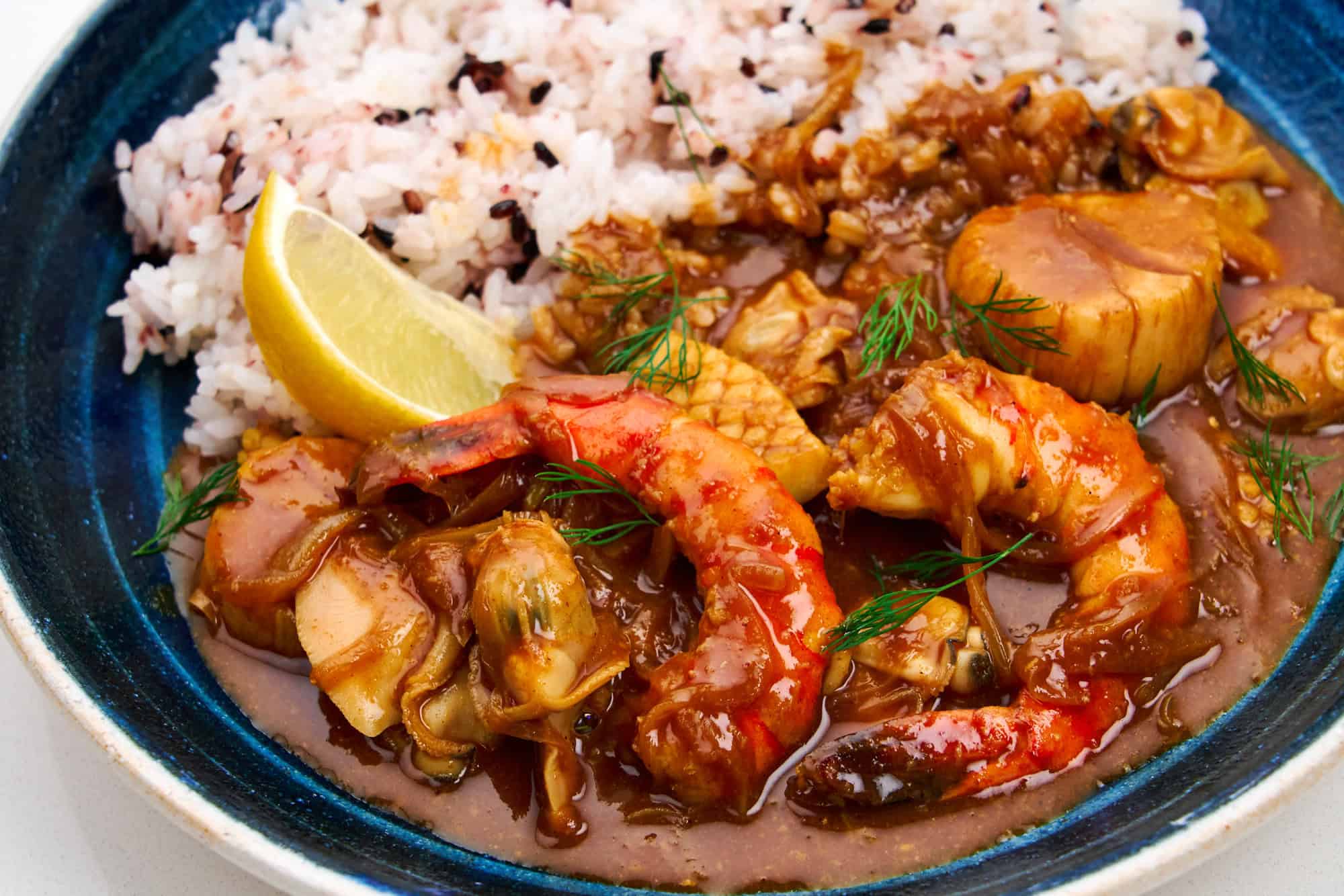
The key is building flavor in layers so nothing has to simmer for hours. I start by marinating the shrimp, scallops, and calamari in aromatics and spices. It doesn't need long, just enough time to prep everything else. Just be sure to thoroughly dry your seafood with paper towels before it goes into the marinade. If you skip that step, it steams instead of sears, and you miss out on that golden crust that adds depth to the roux.
To elevate things a bit (and double down on the briny goodness), I make a quick five-minute clam stock. I used large hamaguri clams, but littlenecks, cherrystones, or quahogs all work. If your clams tend to be sandy, an overnight soak in a 3% saltwater solution lets them purge naturally, filtering the clean water through their siphons and pushing the grit out on their own.
For the roux, I skip the boxed curry blocks since they're usually loaded with additives I'd rather avoid. Instead, I use some pantry staples like curry powder, ketchup, oyster sauce, and a little cocoa powder, thickened with potato starch.
It sounds like an odd combination, but trust me, it works. The cocoa adds an earthy depth that rounds out the spices without making the sauce taste like chocolate, while the oyster sauce fortifies the umami. A small pat of butter stirred in at the end emulsifies the sauce into something glossy and lush, as if it's been simmering all afternoon.
I like to finish it with fresh dill and lemon wedges on the side for a fresh contrast of color and flavor. Parsley, basil, or tarragon are great too. And the lemon? I usually squeeze some in halfway through my meal when I want something bright to reset my palate and pull me back in for another bite.
Access this Recipe
Welcome! I’m Marc Matsumoto, creator of No Recipes and author of the award winning cookbook Ultimate Bento. You’ve stumbled upon my secret stash with 378 original recipes with a new one coming every week! Unlike my other site, these recipes are member-supported, so you won’t find any banner ads here. Please consider becoming a member to access to this recipe, or you can check out some free recipes here.
- ✓ No ads
- ✓ Access the full stash of 378 recipes
- ✓ 1 new recipe per week
- ✓ Support Norecipes.com
Already a member?


Comments
No Comments