









Some dishes have a way of lingering in your memory long after the last bite, and Piperade is one of them. I first encountered this Basque treasure at Gerald Hirigoyen's San Francisco restaurant named after the dish over 2 decades ago. I was saddened to learn that Chef Hirigoyen retired last year, but his legacy lives on in the countless diners he introduced to the vibrant world of Basque cuisine.
Recently, I found myself with an unexpected bounty of peppers in all shapes and colors, leftover from a stuffed pepper recipe I was working on for Bento Expo. I had just posted this recipe for Black Pepper Chicken over at No Recipes, so it was too late to use them for that. It felt like the universe was nudging me toward making Piperade.
This rustic Basque dish transforms humble ingredients – olive oil, peppers, tomatoes, and onions – into something truly magical. By stewing them together, it builds layers of flavors and textures that mellow and meld together until they're velvety and sweet. It's reminiscent of other tomato-pepper stews you might know, like Shakshouka, Lescó, Menemen or my Pepper Chicken Stew; yet Piperade has its own unique warmth and comforting depth.
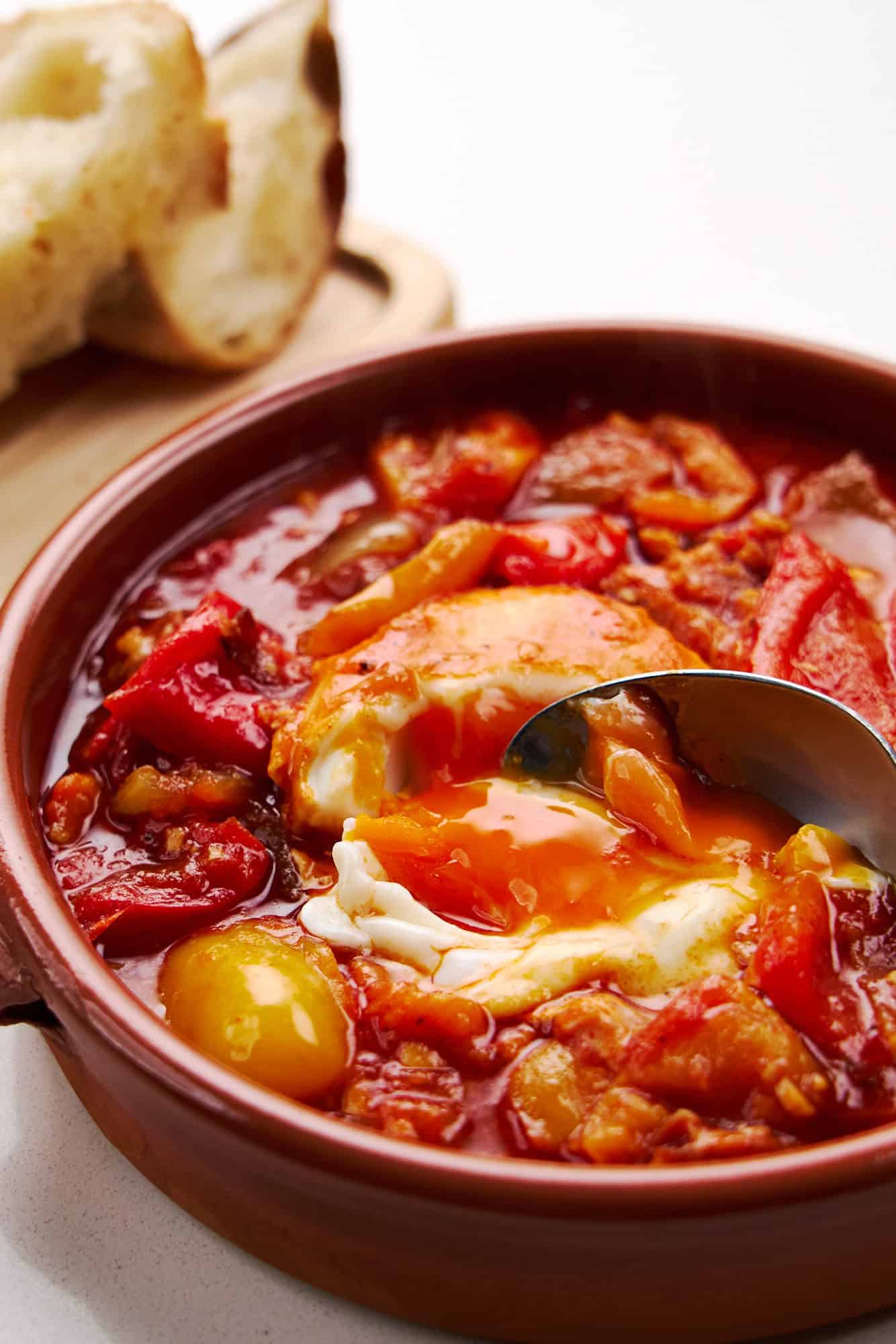
While Piperade can be served as a side dish, it can just as easily become the star of the meal. If you plan to enjoy it as a main, I recommend adding large batons of dry-cured meat like Jamón or Chistorra. I also like poaching a few eggs right in the sauce—when the yolks are just barely set, they add a luxurious richness that's perfect for scooping up with crusty bread.
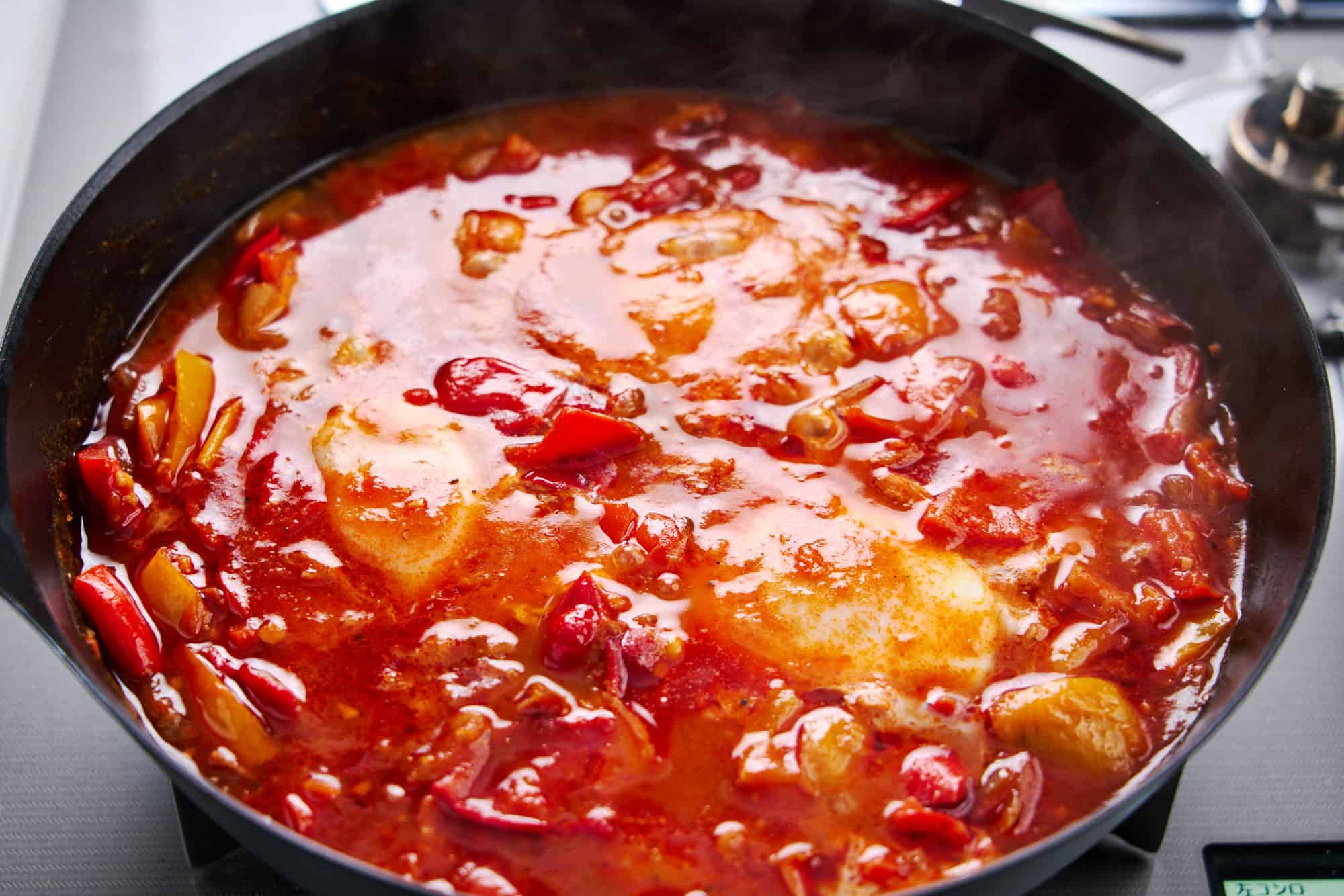
Like most simple dishes, the key to great Piperade lies in the ingredients. For the olive oil, choose one with a smooth, creamy finish, ideally made from ripe olives. I like using Spanish olive oil here—it complements the dish with a subtle richness that doesn't overpower the delicate flavor of the peppers. When it comes to peppers, I used a blend of fresh paprika and bell peppers, but any sweet peppers will work beautifully. Don't be afraid to experiment with different types of peppers or to add extra spices if you're feeling adventurous.
It's worth noting that Piperade is traditionally spiced with Espelette pepper, but this can be tough to find, so I've substituted a combo of sweet paprika with a little smoked hot paprika.
Welcome to my Secret Stash!
I’m Marc Matsumoto, creator of No Recipes and author of the award winning cookbook Ultimate Bento. You’ve stumbled upon my secret stash with 378 original recipes with a new one coming every week! Unlike my other site, these recipes are member-supported, so you won’t find any banner ads here. If you enjoy this recipe below, please consider becoming a member to access the rest of my private cookbook and get updates with my latest recipes.
- ✓ No ads
- ✓ Access the full stash of 378 recipes
- ✓ 1 new recipe per week
- ✓ Support Norecipes.com

Units
Ingredients
- 820 grams sweet peppers
- 250 grams onion 1 medium onion
- ¼ cup Spanish olive oil
- 50 grams dry cured ham such as jamon Serrano chopped
- 20 grams garlic minced
- 1 large bay leaf
- 1 cup tomato passata
- 1 tablespoon sweet paprika
- 1 teaspoon salt
- ½ teaspoon smoked hot paprika
- ¼ teaspoon black pepper
- 4 eggs
Instructions
-
Remove the stems, membranes, and seeds from 820 grams sweet peppers with a knife. Then, cut the peppers and 250 grams onion into ¾” (19mm) squares.

-
Add ¼ cup Spanish olive oil, 50 grams dry cured ham, and 20 grams garlic to a large deep pan and fry until the ingredients are fragrant but the garlic hasn’t browned.
-
Add the peppers, onions, and 1 large bay leaf, and continue sautéing until the vegetables start to soften.
-
Add 1 cup tomato passata, 1 tablespoon sweet paprika, 1 teaspoon salt, ½ teaspoon smoked hot paprika, and ¼ teaspoon black pepper to the pan and stir to combine. Cover the pan with a lid, turn down the heat to maintain a gentle simmer, and cook the Piperade for 45 minutes, stirring periodically to prevent burning.
-
If your Piperade is too watery, you can cook it for longer without the lid to thicken it up.
-
If you want to poach eggs with the sauce, use a large spoon to make wells in the Piperade and break 4 eggs into them (1 per well).
-
Use the spoon to cover the eggs with sauce, and then cover and cook until the eggs are done to your liking.
-
Serve the Piperade with warm, crusty bread for dipping.


Comments
No Comments