







I know we haven't hit Christmas yet, but in Japan, the night of December 25th marks an instant shift. Stores undergo an almost theatrical transformation from Christmas mode to New Year's, and everything becomes about Oshougatsu. Christmas here is a performative holiday, more about dates and parties than family gatherings. New Year's is when families come together to feast, kind of like Thanksgiving and Christmas rolled into one. And Oshougatsu always starts with a piping hot bowl of ozōni (お雑煮).
There are literally hundreds of regional versions across Japan, and each one is shaped by local ingredients and tradition. In Kyoto, you'll find a sweet white miso broth with round mochi. Kagawa has anmochi zoni, where sweet red bean-filled mochi bobs in miso soup. Down in Hakata, it's yellowtail and local katsuona greens with a small round mochi. But the version I want to share with you today is the one I grew up eating: Tokyo-style ozoni. Beyond being the version closest to my heart, it's also the most practical to make abroad since most of the ingredients are pretty common, and it's easy to make substitutions.
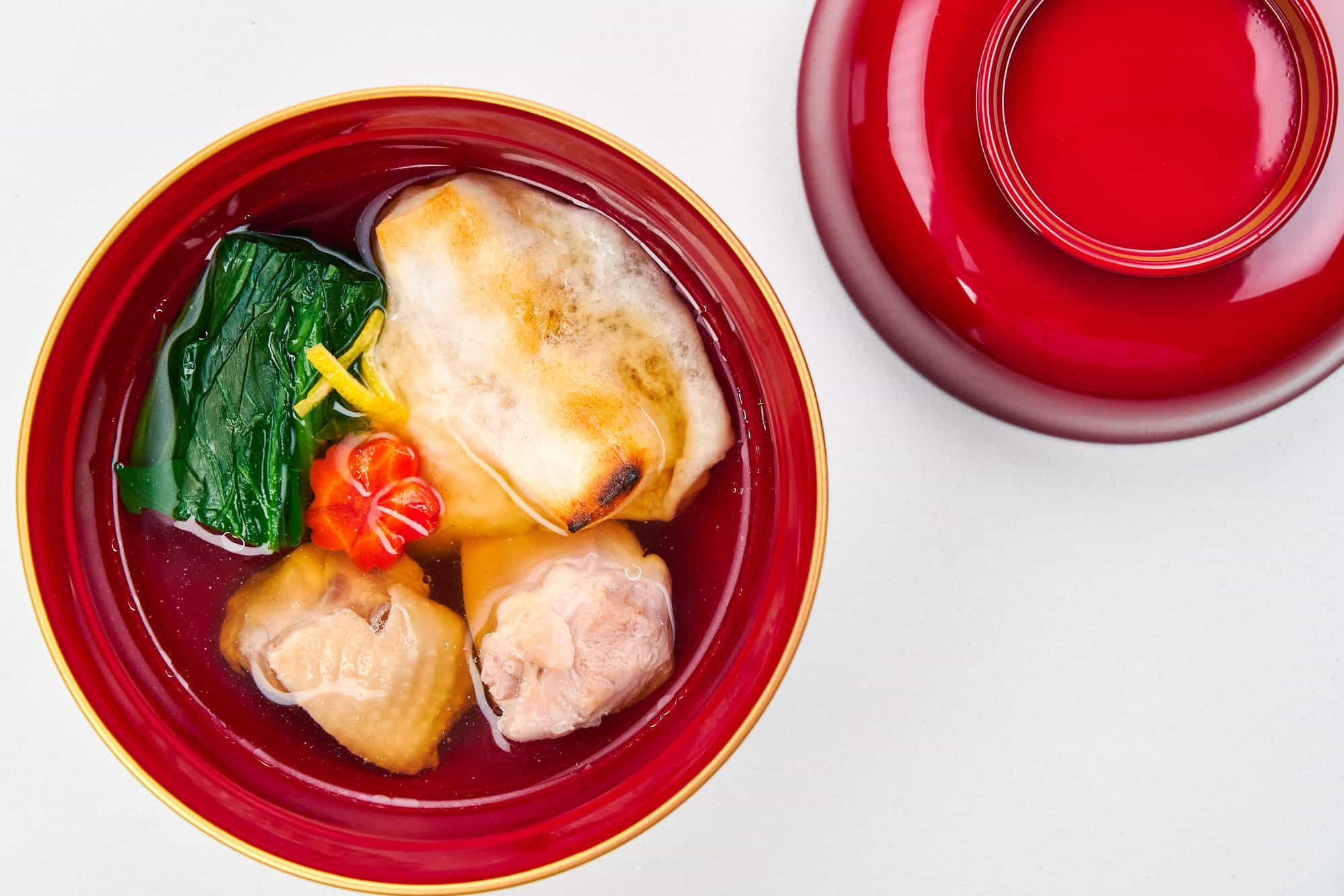
Tokyo-style ozoni is defined by its clear, soy sauce-seasoned dashi broth (sumashi style) and rectangular kirimochi that's toasted until puffy and golden. Cut rectangular mochi became the standard in the Kanto region during the Edo period because flat blocks were easier to mass-produce, stack, and transport. They also toast up more evenly than the hand-shaped round mochi found in other parts of Japan.
Since the Kanto region was historically a major producer of soy sauce, it's the main seasoning for Tokyo-style ozoni. A classic bowl also includes chicken, a leafy green, decoratively cut carrots, and a fragrant yuzu garnish.
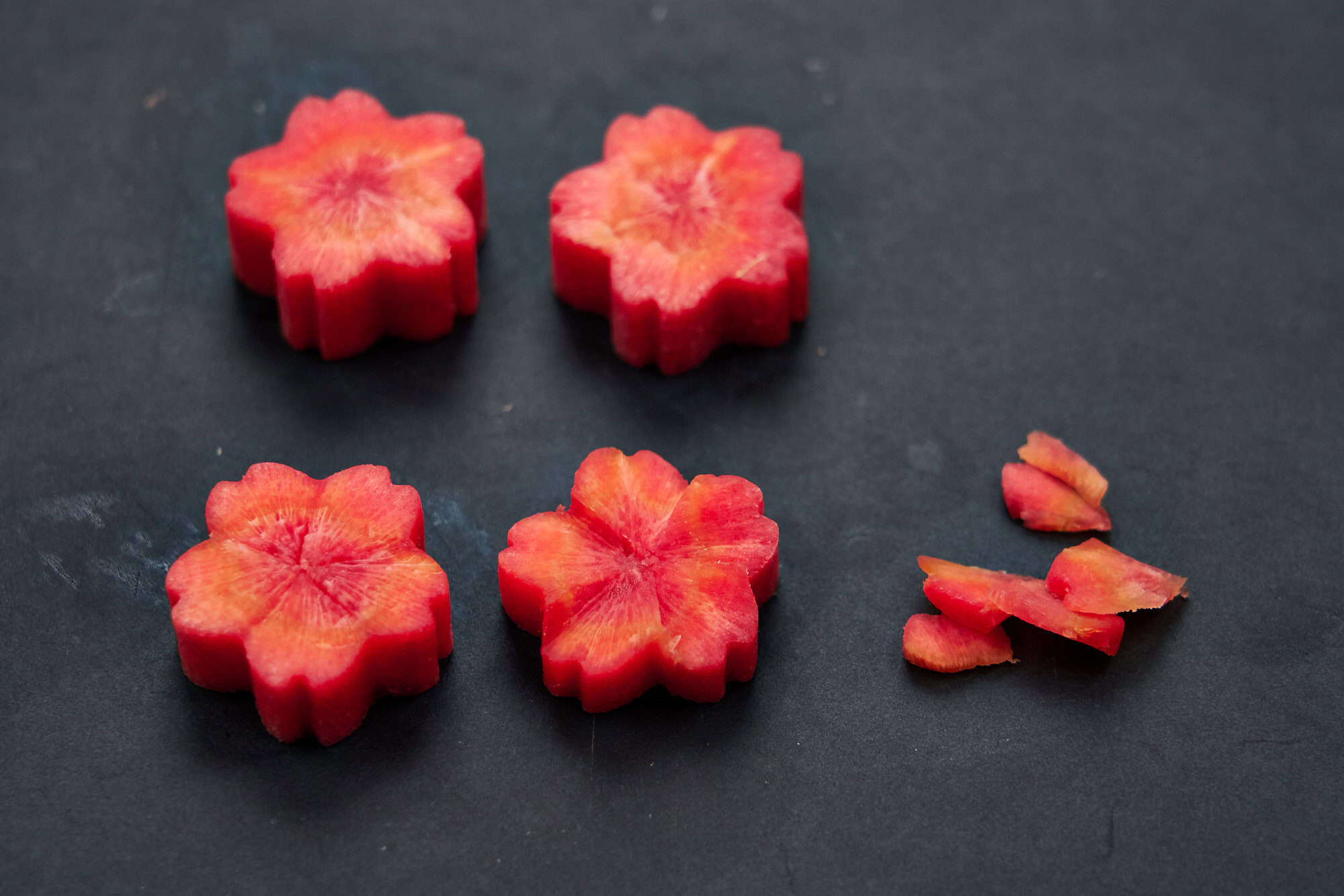
For mine, I used kintokininjin (red carrots) because their scarlet red hue symbolizes good fortune and helps usher in luck for the new year. Regular carrots work just as well if you can't find them. Same goes for the broth: if you don't have dashi, chicken stock does the job nicely.
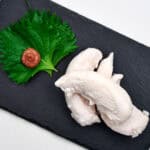
Before cooking, I marinate the chicken briefly in sake and salt, which seasons it and keeps it tender. Cooking the chicken directly in the broth clouds it slightly, but I like the extra depth it adds. If clarity matters to you, just strain the broth through a fine-mesh sieve after the chicken is cooked.
However you make it, ozoni is a wonderfully comforting bowl to get the new year started!
Access this Recipe
Welcome! I’m Marc Matsumoto, creator of No Recipes and author of the award winning cookbook Ultimate Bento. You’ve stumbled upon my secret stash with 378 original recipes with a new one coming every week! Unlike my other site, these recipes are member-supported, so you won’t find any banner ads here. Please consider becoming a member to access to this recipe, or you can check out some free recipes here.
- ✓ No ads
- ✓ Access the full stash of 378 recipes
- ✓ 1 new recipe per week
- ✓ Support Norecipes.com
Already a member?

Kathy Stroup says
It’s beautiful! Thanks for sharing 😊
Marc Matsumoto says
Thanks Kathy😊 Hoping to do a different version every year.