
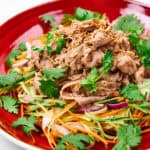
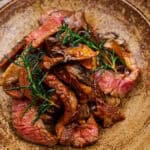
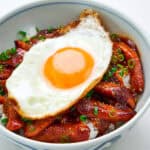
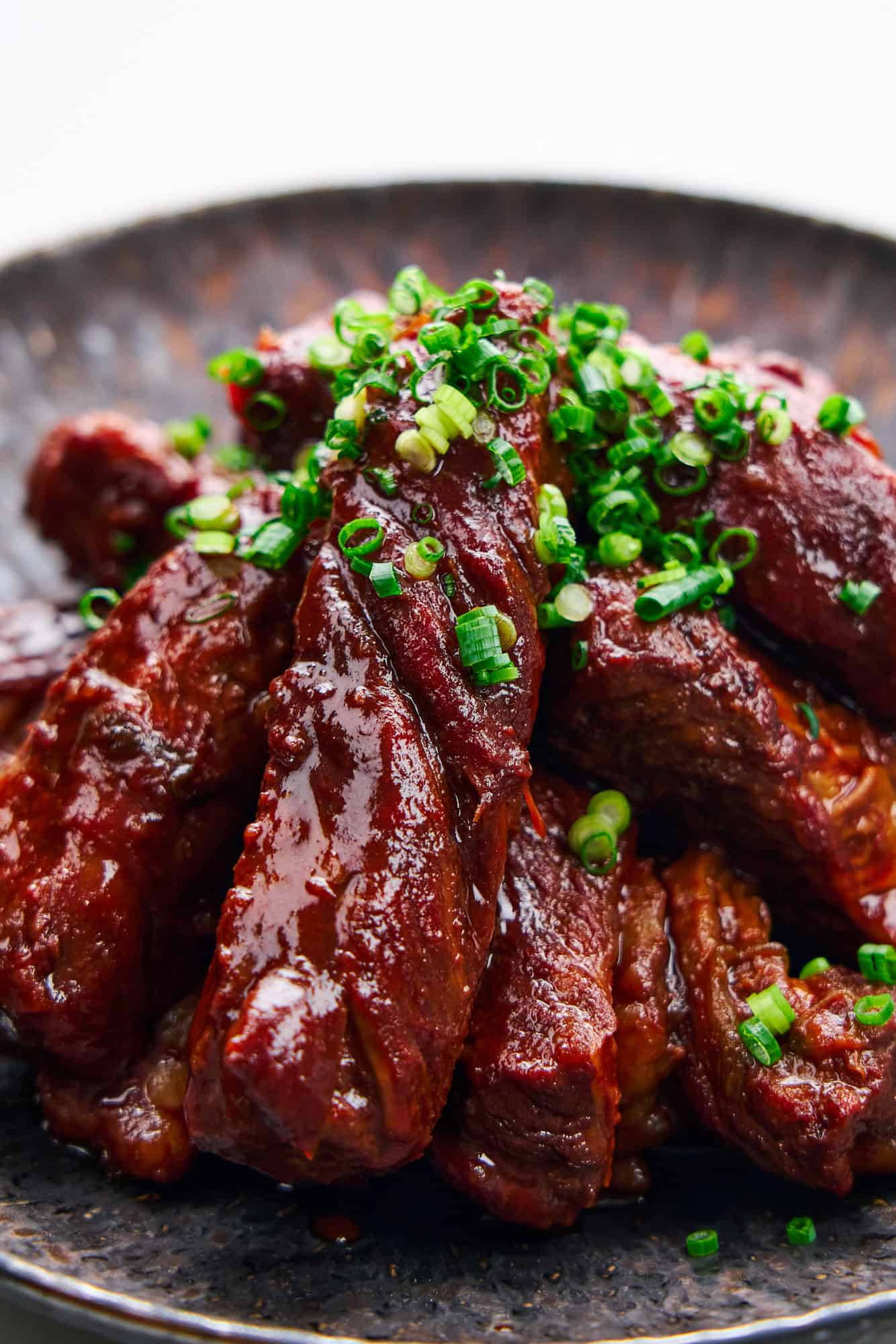
I first noticed "rib fingers" at Costco a few years ago, and the name piqued my curiosity. Tucked between the usual cuts of beef and marbled with fat, these boneless beef ribs seemed like the kind of thing with serious potential—if cooked correctly. Last week, curiosity finally won, and I grabbed a pack. Lemme tell you, I wasn't disappointed.
Rib fingers are the meat between the ribs, so they've got all the rich, beefy flavor of back ribs but without the bones. The catch? They're loaded with fat and tough connective tissue, so you wouldn't want to grill them up like a steak. But given enough time and gentle heat, all that gristly collagen melts into silky gelatin, and the rubbery fat renders into a luscious lubricant that keeps the meat juicy and tender. What you get is the best of both worlds: melt-in-your-mouth tenderness with just enough structure to hold its shape, making these as easy to eat as they are satisfying.
For the braising liquid, I took inspiration from my gochujang-braised pork belly but leaned into a Kansas City-style barbecue profile. The gochujang lays down a deep, savory base, packing loads of umami with mild heat and sweetness. Soy sauce, brown sugar, and rice vinegar balance salty, sweet, and tangy, while sake infuses the braising liquid with even more umami. Once the rib fingers are nice and tender, I strain and reduce the braising liquid into a glossy finger-licking glaze that sticks to the ribs like molten caramel.
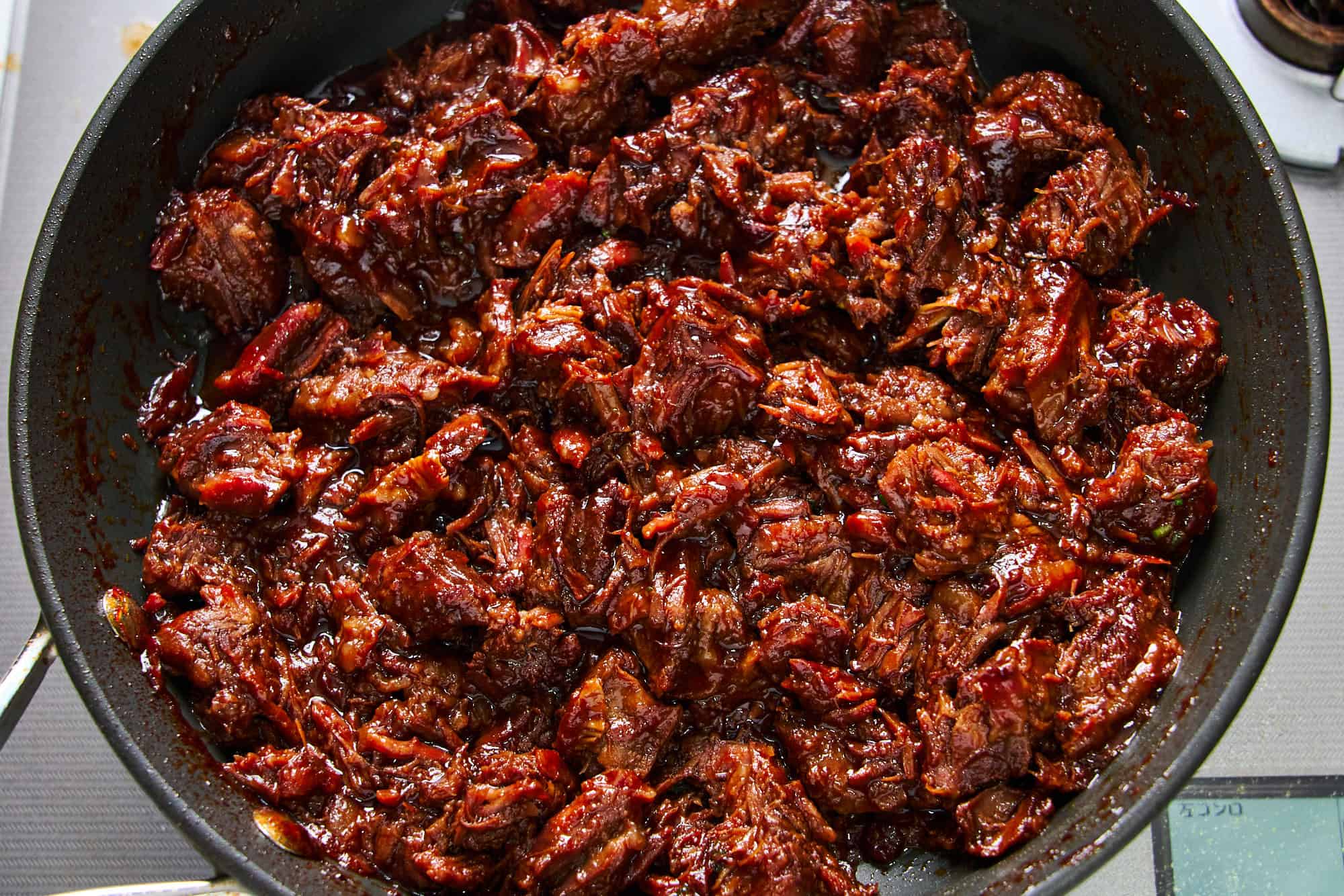
Despite being the dominant seasoning, gochujang isn't particularly spicy, so if you like more heat, you can spike the sauce with your favorite hot sauce at the end. I also like to add a bit more vinegar at the end to liven it up, but this is also optional. I used rib fingers, but this recipe works just as well with bone-in short ribs, beef shanks, or even pork spare ribs.
When it comes to serving, you've got options. The Asian flavor profile makes them well-suited for serving over rice, but if you shred the meat, it's perfect for sandwiches. If you go the sandwich route, keep an eye out—I've got a tangy coleslaw recipe coming next week that's the perfect match.
Welcome to my Secret Stash!
I’m Marc Matsumoto, creator of No Recipes and author of the award winning cookbook Ultimate Bento. You’ve stumbled upon my secret stash with 378 original recipes with a new one coming every week! Unlike my other site, these recipes are member-supported, so you won’t find any banner ads here. If you enjoy this recipe below, please consider becoming a member to access the rest of my private cookbook and get updates with my latest recipes.
- ✓ No ads
- ✓ Access the full stash of 378 recipes
- ✓ 1 new recipe per week
- ✓ Support Norecipes.com

Units
Ingredients
- 1700 grams beef rib fingers
- 1 tablespoon vegetable oil
- 75 grams scallions cut into 2 inch lengths
- 20 grams garlic smashed
- 20 grams ginger cut into coins
- 2 cups sake
- ½ cup gochujang
- 3 tablespoon soy sauce
- 2 tablespoons rice vinegar
- 2 tablespoons dark brown sugar
- 1 tablespoon rice vinegar
Instructions
- Cut 1700 grams beef rib fingers in half to make them more manageable.
-
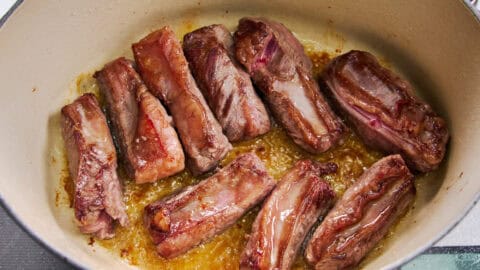
Add 1 tablespoon vegetable oilto a large heavy-bottomed pot such as a Dutch oven, and brown the beef on both sides in batches.

-
After removing the last batch of ribs, add 75 grams scallions, 20 grams garlic, and 20 grams ginger to the oil and fry the aromatics until they’ve started to brown.
-
Use a paper towel to soak up the excess oil.
-
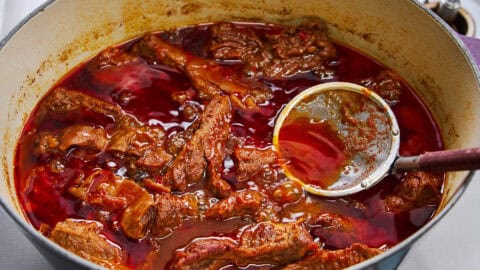
Return the ribs to the pot and add 2 cups sake, ½ cup gochujang, 3 tablespoon soy sauce, 2 tablespoons rice vinegar, and 2 tablespoons dark brown sugar. Bring the mixture to a boil, cover with a lid, and lower the heat to maintain a gentle simmer.
-
The rib fingers will render a lot of fat, so use a skimmer to remove it periodically.
-
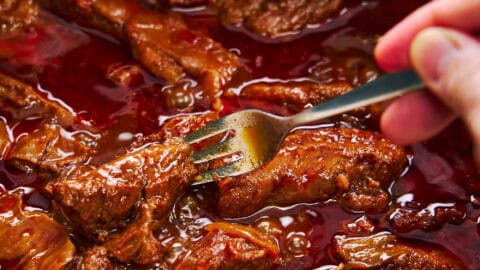
The ribs are done when a fork passes easily through the meat. This will take 2 to 2 ½ hours.
-
Remove the ribs from the pot and skim off as much fat as possible.
-
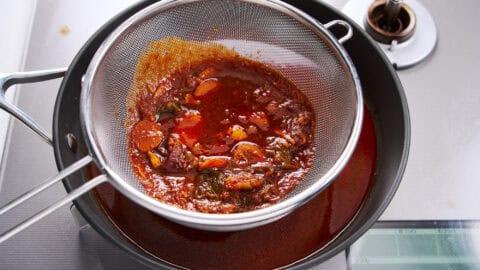
Strain the braising liquid through a sieve into a large pan.
-
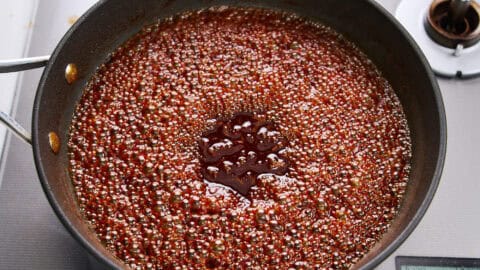
Boil the braising liquid until it is thick and glossy.
-
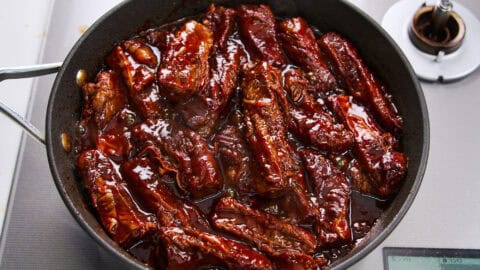
Add the remaining 1 tablespoon rice vinegar, braised rib fingers, and glaze with the sauce.
-
I like serving these with rice, but you can also pull the beef and make sandwiches.






Veronica Woo says
What do the beef rib look like in the costco package so I would know what to look for.
Thanks, Veronica
Marc Matsumoto says
Hi Veronica, unfortunately I didn't take a photo of the package, but it comes vacuum-sealed, and looks like this: https://youneedabbq.com/wp-content/uploads/2021/02/Beef-Finger-Meat-Package-300x300.jpg
Darrell Moran says
Well, this was just spectacular. Can't believe the flavor/texture transformation to such a tough cut of (flavorful) meat. Really the best aspects of Korean and French cuisine (think Boeuf Bourguignon) fused together (don't forget the scallions, they really give it something special). I served it over Japanese rice and did a quick side of shingensai/bak-choi with a drizzle of that amazing sauce. Only pointer I would say is that the sauce took a bit longer than I expected to reduce (not the same sugar level as teriyaki so that's natural). Just allow for a few minutes at the end to reduce it properly without overdoing it. My only regret is not making a double portion (for pulled meat sandwiches for lunch tomorrow or maybe a breakfast side with eggs and hash browns) as the family simply wolfed this down! Thanks a million once more, Marc!
Marc Matsumoto says
Hi DJ, sorry I missed this! Hope you have a chance to make a larger batch next time, it's really good pulled in sandwiches (or even as a donburi with onsen tamago). Definitely gonna have to try it with a sift of fried eggs and hashbrowns next time I do this!
Matthew Buckley says
I used the leftover glaze on some grilled chicken and fried pork belly... so good!
Marc Matsumoto says
Hi Matthew, I'm happy you enjoyed it, thanks for letting me know! Great call on saving the extra glaze for something else!